A design system is a shared language connecting decisions, patterns, documentation, people and code. My work focuses on making that language useful enough that teams actually want to use it.
Systems should reduce decision fatigue without removing judgment. Their architecture should reflect product intent, not Figma convenience.
Documentation should explain why, not only how.
And a successful system is measured by adoption and outcomes, not by the number of components it contains.
Color, typography, spacing, grids, accessibility and responsive behavior.
Semantic decisions structured so they remain understandable across themes, platforms and tools.
Reusable building blocks with clear anatomy, states, behavior and composition rules.
Guidance, contribution models and rituals that help a system survive beyond its initial build.
Over the years, I’ve contributed to product and design-system work for startups, scale-ups and established companies — helping teams create more consistent interfaces, stronger foundations and better ways of working between design and development.





Alongside client work, I build my own tools, resources and learning experiences around design systems. These projects give me space to test new Figma features, refine methodologies and explore how systems need to evolve as AI becomes part of the design-to-production workflow.
A minimal, structured Figma file built so that AI tools — Cursor, Codex, Claude, Figma AI — can actually read and use it. This one is opinionated about naming, tokens, components and documentation in a way that makes AI-assisted development frictionless.
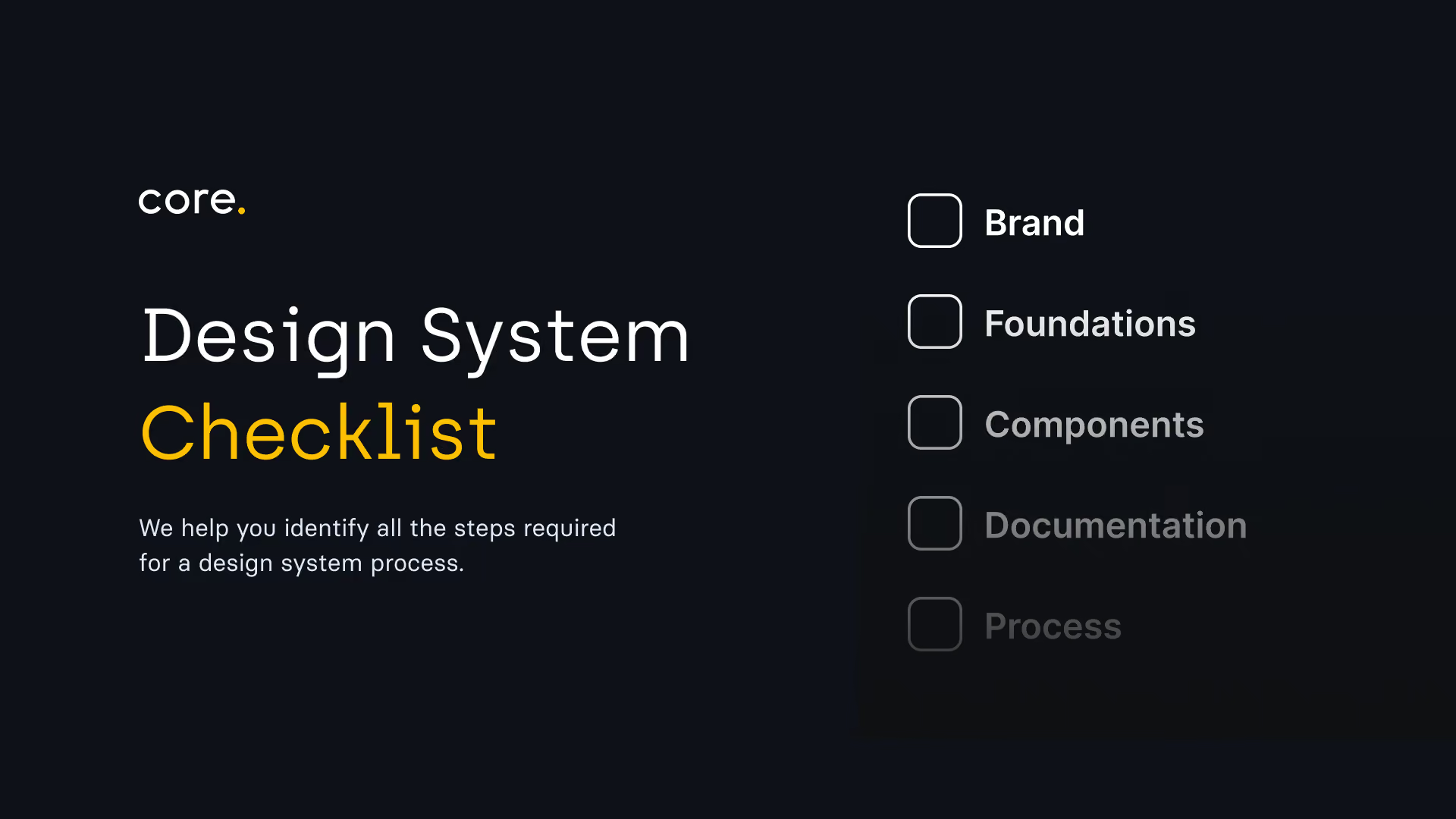
Discover projectThis checklist is a document that outlines best practices for implementing and maintaining a design system. It helps ensure all key aspects—such as guidelines, components, and documentation—are covered and consistent.
Discover project